Perimenopause isn't one or two symptoms — current research and clinical guidelines now recognize a wide spectrum, from hot flashes and joint pain to brain fog, mood changes, sleep disruption, and irregular bleeding. Most women experience a combination of these, often years before periods stop completely, and most never connect the dots. You're not imagining it, and you're not broken. There is no single test that confirms perimenopause — it's mainly recognized by your symptoms and your cycle changes, especially from your mid-forties onward.
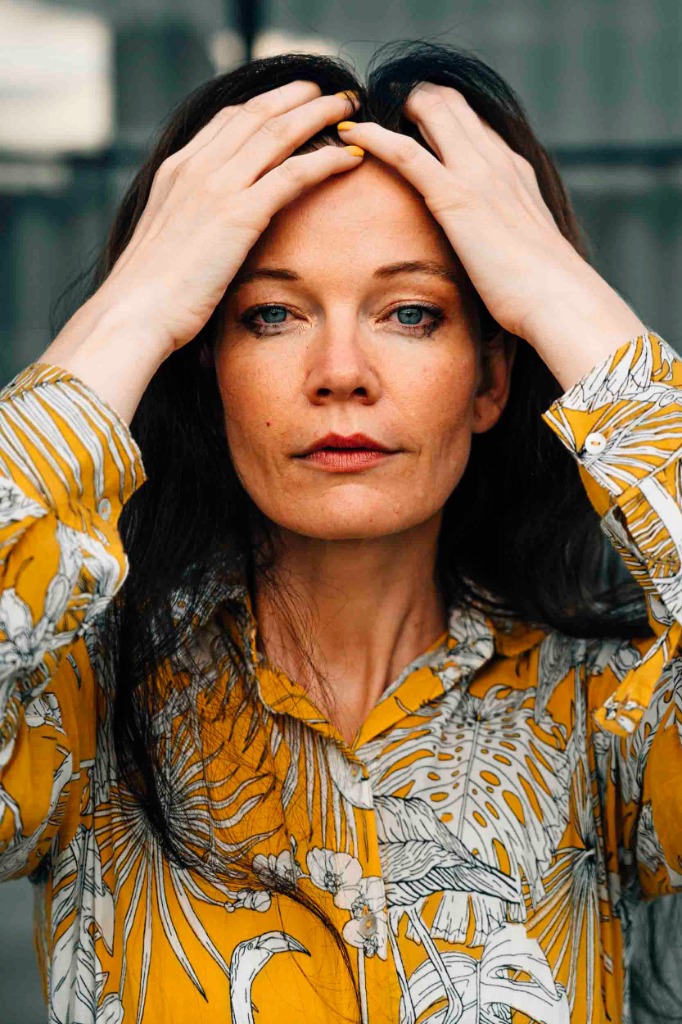
For a year and a half, I sat in waiting rooms.
I'm a physical education teacher. I teach Pilates. I know what a healthy body is supposed to feel like — I've spent my whole career watching other people's bodies and helping them move better. And still, for eighteen months, I went from doctor to doctor trying to explain what was happening to mine, and not one of them said the word "perimenopause" to me.
I had joint pain that came out of nowhere. I'd wake up at 3 a.m. for no reason and just lie there, wide awake, while my husband slept beside me like nothing was happening. I'd walk into a room and forget why. I'd snap at my daughter over something so small I'd feel embarrassed five minutes later. Nobody connected any of it. I didn't connect it either — and I'm the professional in the room.
That's exactly why I'm writing this. Not as someone looking down from a podium, but as someone who lived it first and only understood it after.
So what actually counts as a perimenopause symptom?
A perimenopause symptom can be any change in your body or mood caused by fluctuating hormone levels, encompassing over 25 recognized symptoms across physical, cognitive, and emotional categories. The most common markers are irregular menstrual cycles and vasomotor symptoms like hot flashes.
Here's the honest answer: more than most people think, and the list keeps getting more precise as research catches up. For a long time, the U.S. National Institutes of Health only confidently linked two symptoms to menopause — hot flashes and vaginal dryness because uncertainty existed about which symptoms menopause actually causes, and a 2005 NIH review concluded that only vasomotor symptoms and vaginal dryness were clearly attributable to it. But the clinical picture has broadened considerably since then. Current guidance recognizes perimenopause through a wider lens: irregularity in your cycle and vasomotor symptoms together, even in women as young as 40 to 45.
And the symptom list researchers are now studying goes well beyond hot flashes. A 2024 review on the global picture of perimenopause notes considerable variation in how women experience cognitive issues, mood changes, sleep disturbances, urogenital symptoms, joint and muscle pain, and changes in libido — which is the academic way of saying: it shows up differently in every woman, but it shows up in a lot of places at once.
In practice, I group what I see — in myself, in my clients, and in what the research backs up — into seven areas:
- Vasomotor — hot flashes, dry skin, hair thinning. The classic ones, and usually the first thing people associate with "the change."
- Physical — joint pain, headaches, heart palpitations, breast tenderness, bloating. This is the category that gets dismissed the most. I had a doctor tell me my knee pain was "probably just from teaching Pilates."
- Cognitive — brain fog, word-finding trouble, dizziness, concentration problems, memory lapses. If you've ever stood in a doorway with absolutely no idea why you walked in there — this is why.
- Mood — anxiety, restlessness, low motivation, a drop in self-confidence.
- Sleep-related — poor sleep quality, drowsiness, appetite changes (more or less hungry than usual). If you are struggling with night waking, you can read our guide on How Hormonal Shifts Disrupt Sleep.
- Intimate — vaginal dryness, urinary urgency. (I won't go deeper into this category here — it deserves, and will get, its own honest article.)
- Cycle-related — early or light bleeding, or sometimes no period at all that month. That last one trips a lot of women up, because "no period" doesn't feel like a symptom — it feels like nothing happened. But in perimenopause, nothing happening is often the something.
That's around 25 distinct symptoms, and here's the part that matters most: you don't need all of them, and you don't need them constantly. Most women get a rotating handful, with intensity that goes up and down week to week. That variability is normal — it's not a sign that something else is wrong.
Why Did Nobody Tell You About This Sooner?
Most women are never warned about the full spectrum of perimenopause symptoms because medical training has historically focused only on hot flashes and cycle stops, ignoring the cognitive and physical changes. Additionally, there is no single diagnostic blood test, meaning these changes are often dismissed as unrelated issues.
Sleep is a good example of how the disconnect happens. The onset or worsening of sleep disturbances is common during the menopausal transition, including insomnia and other sleep disorders — and yet most women are handed sleep hygiene tips with zero mention of why their sleep architecture is suddenly different. You get told to put your phone away an hour before bed. Nobody mentions hormones.
Cognitive symptoms have the same problem. Researchers are now actively studying how perimenopausal symptoms relate to longer-term cognitive and behavioral changes — a 2025 study examined exactly this link in a large aging cohort. The science is still developing, but the message for now is reassuring rather than alarming: brain fog in your forties is a recognized, studied phenomenon, not a sign that something is seriously wrong with you. (And to be clear — I'm not a doctor, and if a symptom feels severe, sudden, or frightening, that conversation belongs with one. I stay in my lane: movement, lifestyle, and what I've tested on myself.)
The bigger issue, the one I genuinely have feelings about: there's still no single blood test that hands you a tidy diagnosis. Guidance from the UK's National Institute for Health and Care Excellence (NICE) is explicit that certain hormone tests like FSH shouldn't be used to identify perimenopause or menopause in women over 45 — it's recognized mainly through your symptoms and your cycle pattern. Which means the burden of noticing falls on you. Nobody is going to hand you a chart. You have to learn to read your own.
What Should You Take Away From This?
Understanding and naming your symptoms is the first step to regaining control and realizing that you are not losing your mind or falling apart. Tracking your symptoms is a highly practical way to clarify what is happening to your body and discuss it productively with your doctor.
I'm not going to tell you that you can fix every symptom on this list with a breathing exercise (some of you have heard me say worse things about empty motivational phrases — "you've got this" is not a strategy). What I will tell you is this: once you can name what's happening, it stops being this shapeless, scary fog and starts being something you can actually work with. A joint ache has a reason. A 3 a.m. wake-up has a reason. The forgetting-why-you-walked-into-a-room has a reason, and it isn't early dementia, and it isn't you "losing it."
This is why we built the Menoup App and the Mona AI Assistant — to help you track these shifts and understand the patterns in your daily data. I track my own symptoms now — intensity, frequency, what came before and after — the same way I used to track my clients' progress. It's the only way I've found to separate "this is perimenopause" from "this is just a bad week." In the coming weeks, I'll walk through specific symptoms one at a time, with what I've actually tried on myself, what worked, and — just as importantly — what didn't.
You're not falling apart. You're going through a stage of life that, for some reason, we still don't talk about enough. Let's change that one honest article at a time.
You can start your journey today by taking the Menoup Symptom Assessment.
Frequently Asked Questions
What is the most common age to start perimenopause?
Most women begin experiencing perimenopause symptoms in their early to mid-40s, though it can start earlier for some.
How do I know if my symptoms are from perimenopause?
If you are over 40 and experiencing irregular cycles alongside symptoms like hot flashes, sleep issues, or joint pain, it is highly likely linked to perimenopause.
Is there a blood test to diagnose perimenopause?
No, there is no single blood test that can reliably diagnose perimenopause because hormone levels fluctuate daily. Diagnosis is based on your symptoms and cycle patterns.
How many symptoms of perimenopause are there?
While only a few are widely discussed, research recognizes around 25 distinct symptoms spanning physical, mental, and emotional categories.
Can lifestyle changes help manage these symptoms?
Yes. Tracking symptoms, getting quality sleep, regular movement like Pilates, and targeted nutrition are proven ways to support your body during this transition.
Last updated: June 21, 2026
Medical Note: This article is for informational purposes only and does not replace professional medical advice. If you experience severe, persistent or concerning symptoms, consult your doctor or healthcare provider.
References
- UK National Institute for Health and Care Excellence (NICE) Guidelines on Menopause (2015/2024).
- NIH State-of-the-Science Conference Statement on Multidisciplinary Perspectives on Menopause (2005).
- Global consensus on perimenopause and menopause management, peer-reviewed endocrinology reviews (2024-2025).